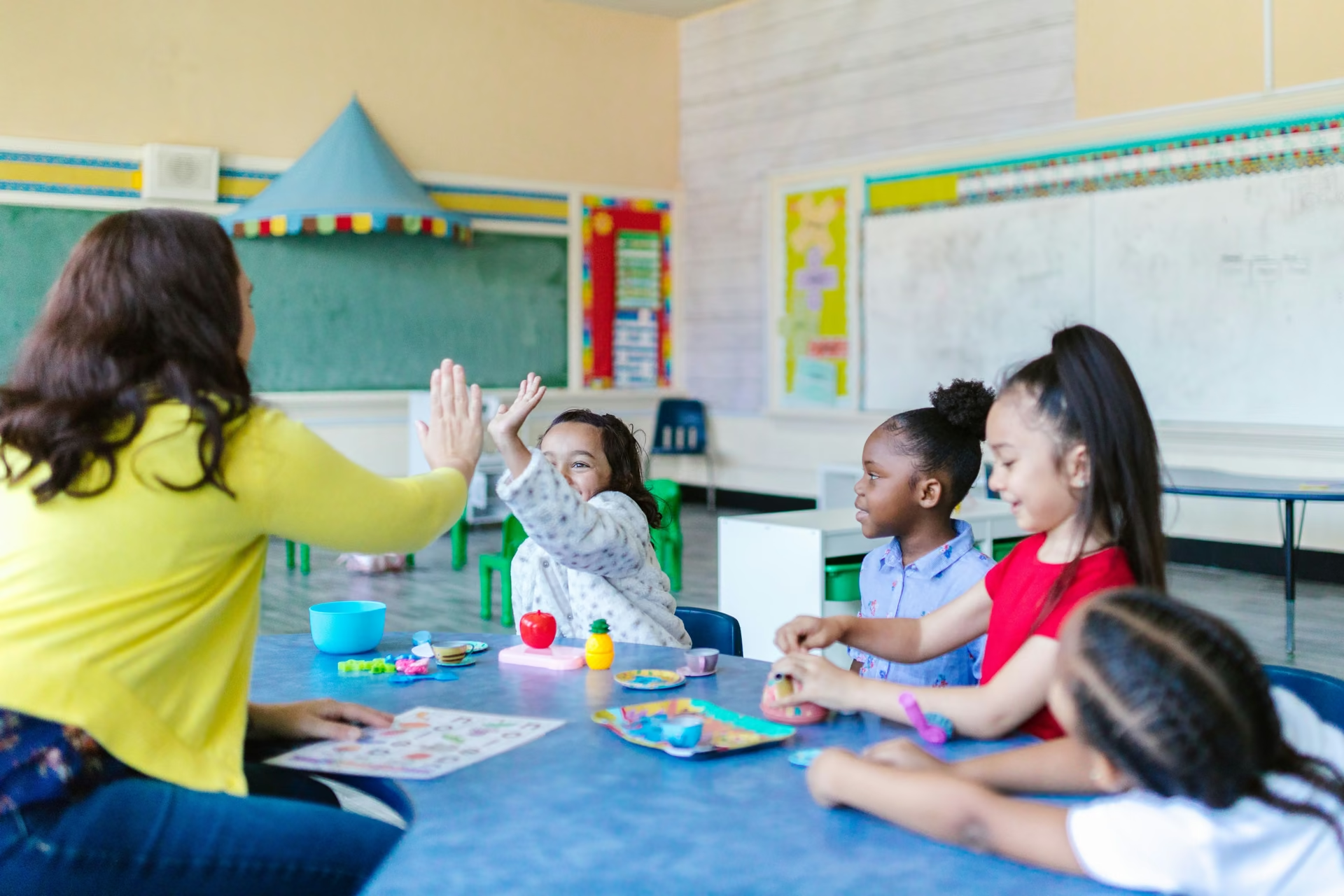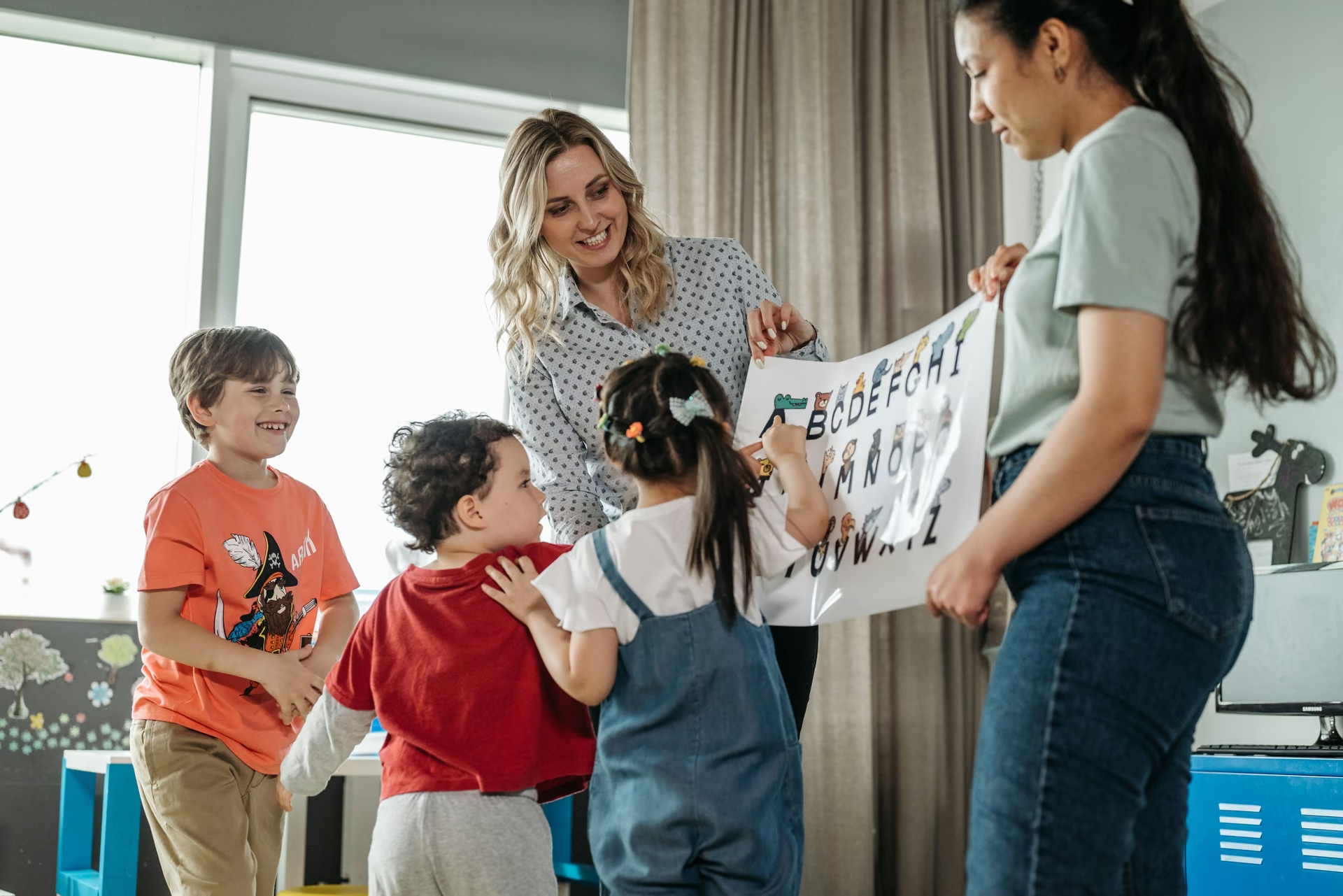

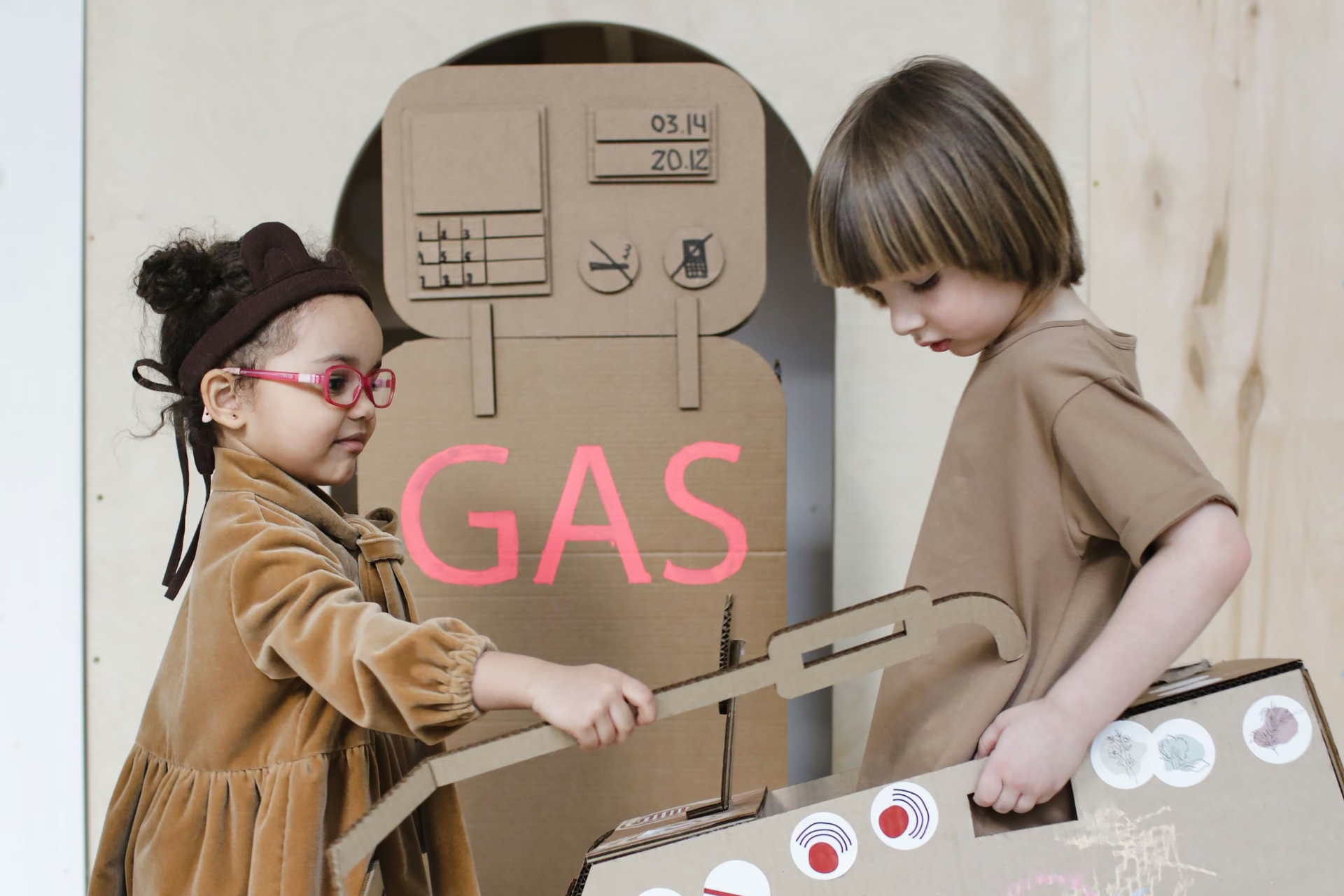
Social and emotional development rarely shows up as a single dramatic breakthrough. It shows up in a toddler who can now wait their turn, a four-year-old who names their frustration instead of biting, and a baby who settles more easily because the same familiar face greets them each morning. These small, everyday moments are the building blocks of the social and emotional skills children carry with them well beyond the early years.
Here are nine practical, EYLF-aligned activities educators can use to build these skills further day to day.
1. Start the day with a feelings check-in
A simple visual chart where children point to, or place their photo beside, a face that matches how they feel gives educators a quick emotional read on the room. Over time, it also gives children an everyday vocabulary for naming feelings on their own, rather than acting them out.
2. Set up a calm space, not a time-out spot
A cushion, some soft lighting and a basket of sensory tools gives a child somewhere to co-regulate with an educator rather than be sent away to cope alone. Modelling calm, naming the feeling and staying nearby teaches self-regulation far more effectively than removing a child from the group.
3. Keep primary care groups stable for under-twos
Where possible, maintaining consistent educators for infants and toddlers can support secure, respectful relationships and a stronger sense of belonging. EYLF V2.0 places strong emphasis on responsive relationships, while the NQS also encourages continuity of educators. Babies and toddlers read safety through familiar faces, voices and routines, and that felt sense of security is what lets them explore, play and eventually take social risks with peers. Constant staff changes make this harder to build, however good the program looks on paper.
4. Teach a simple conflict-resolution script
Give children a short, repeatable sequence, such as naming the problem, saying how they feel, and offering a solution, for sorting out disputes over toys or turns. Practising the same script consistently across the room also makes it easier for relieving casual staff to reinforce it in the same way.
5. Build in mixed-age or buddy activities
Pairing an older pre-schooler with a toddler for a gardening task or a shared story gives both children a chance to practise patience, help-giving and turn-taking. Older children often rise to the responsibility of caring for a younger buddy, while younger children pick up social cues faster from peers than from adults alone.
6. Follow the child's lead, then ask an open question
When a child is deep in dramatic play, resist the urge to redirect it toward a “learning” activity, and instead ask a question that extends what they are already doing. This is intentional and responsive teaching in action. Children who feel genuinely listened to are also more willing to attempt, and recover from, social risks like joining a new group.
7. Weave family and cultural knowledge into everyday routines
Ask families for a song, greeting or comfort routine from home and use it during transitions, not just on a designated “culture day.” This builds the strong sense of identity and belonging, since children regulate more easily and socialise faster when they see their home life reflected in the room. It also gives educators a genuine, ongoing reason to talk with families about what matters to their child.
8. Hand over real choices and small responsibilities
Let children choose between two genuine options, or take on a job like setting the table or leading the line, rather than offering choices that do not really matter. Self-esteem built this way, through real contribution, tends to be sturdier than praise alone.
9. Write down the specific moment, not just the milestone
A short, specific note, such as “Amelia offered Noah the last block and said ‘your turn’,” tells you and the child's family far more than a generic tick against a checklist. Over time, these small notes also become a genuine, honest record of how a child's social and emotional skills are actually developing.
Make it part of everyday practice
None of this requires a special program or an outside consultant. It works best as a set of habits: the same calm response, the same familiar faces, the same habit of writing down what actually happened, repeated often enough that it becomes how your room runs.
Consistency like this is easier when your team is stable and well supported. QuickCare gives services the staffing visibility to help protect that continuity, so educators can be the reliable, familiar presence children need to build these skills. Book a demo to see how it works for your service.